03: the birds and the bees of mutual benefit, or where co-ops come from
Summary
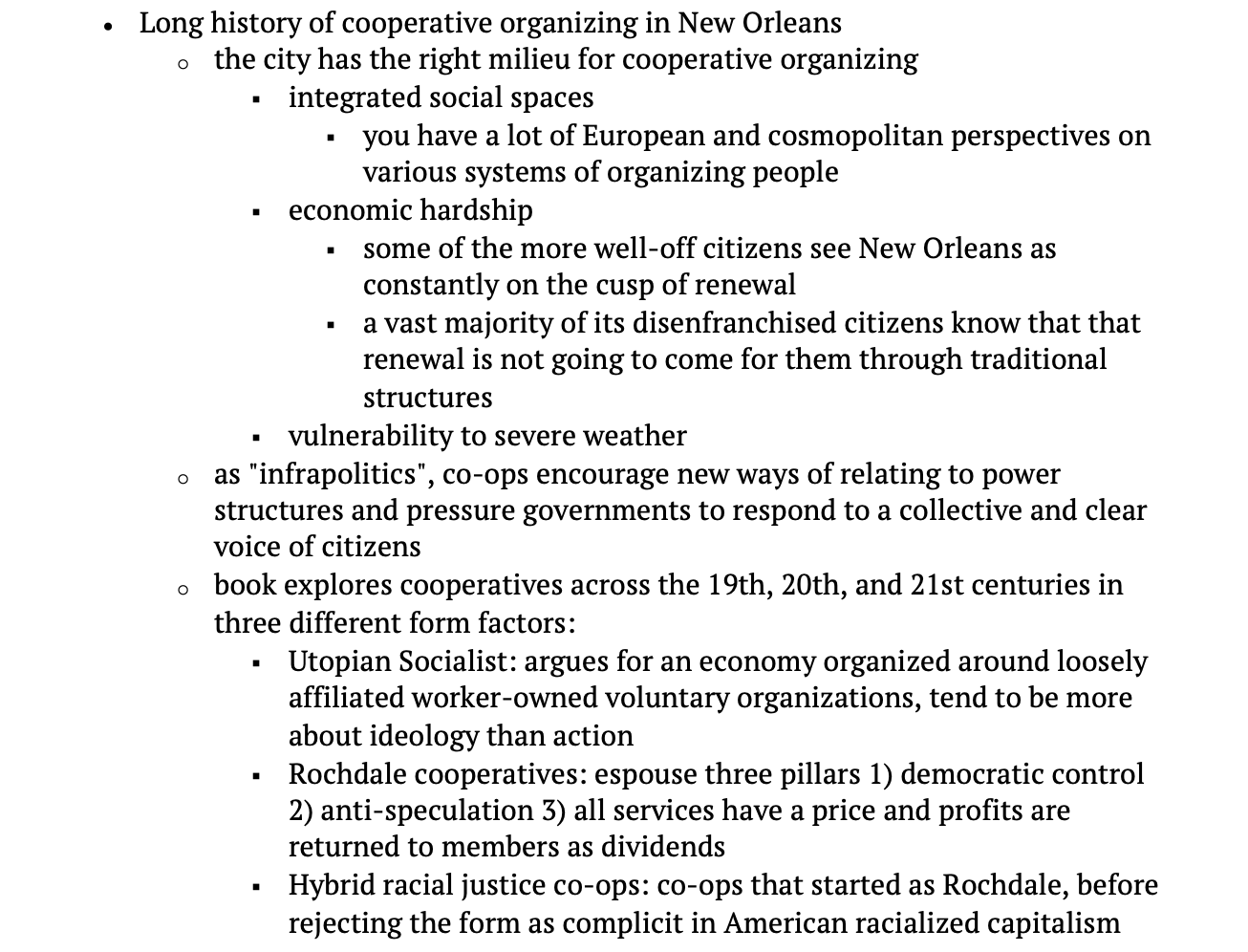
A survey of cooperative structures in the city of New Orleans in the 19th, 20th, and 21st centuries, Cooperatives in New Orleans: Collective Action and Urban Development (Anne Gessler) necessarily ranges to encompass aspects of co-op proliferation across the Gulf Cost/Southeast regions. It's predominantly an exploration of the social values and contexts that give rise to cooperatives, but it begins to explore the economics of these structures as well. It includes cooperatives along a spectrum of formality and ideology, giving readers a sense for many flavors of the form.
Points that stuck with me
- The book begins and ends with assertions on the rich ecosystems of cooperatives in New Orleans, and the greater South. These communities are the frontier of formal and informal collective organizing, though government and non-profit authorities have not always seen it as such.
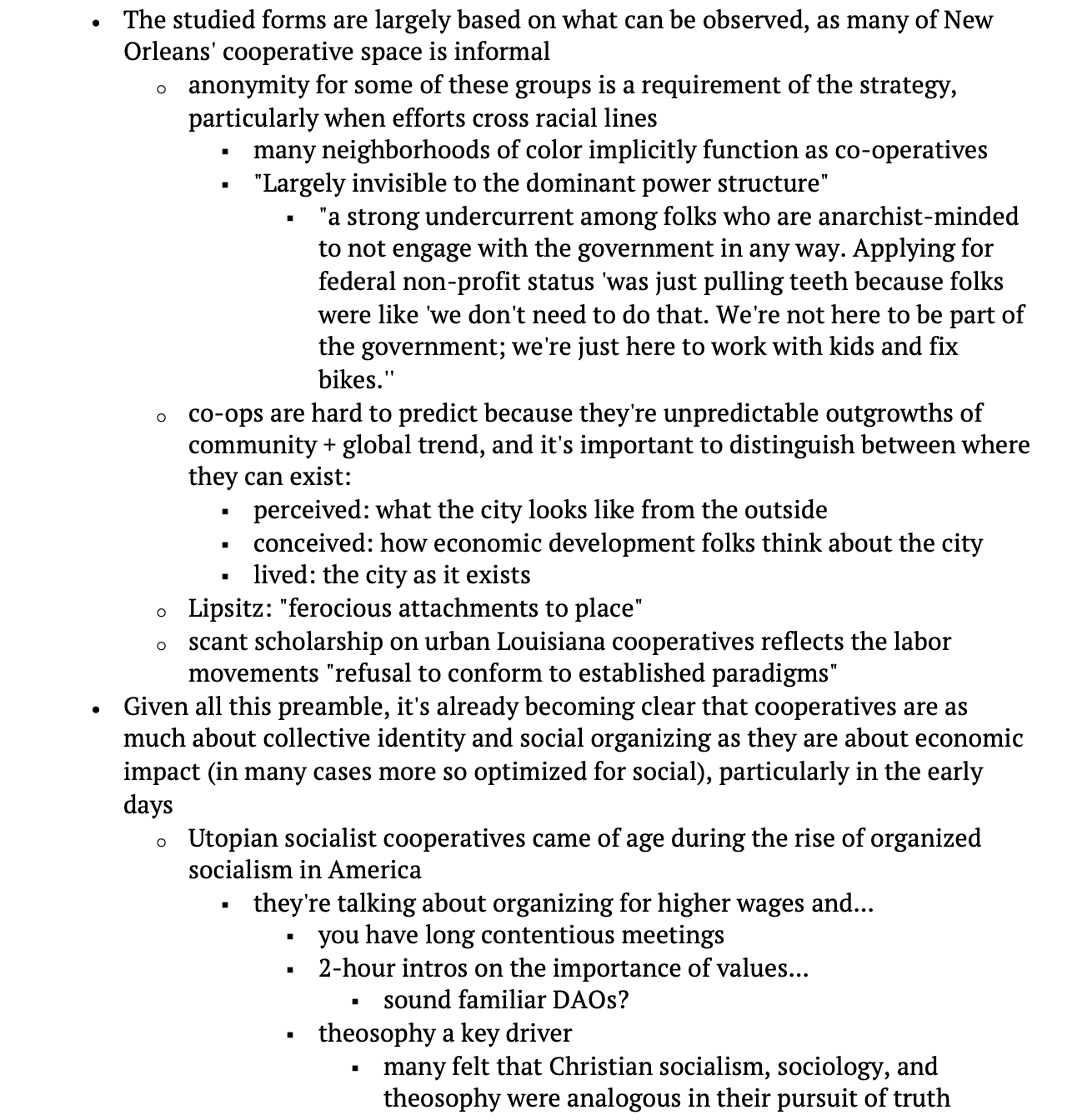
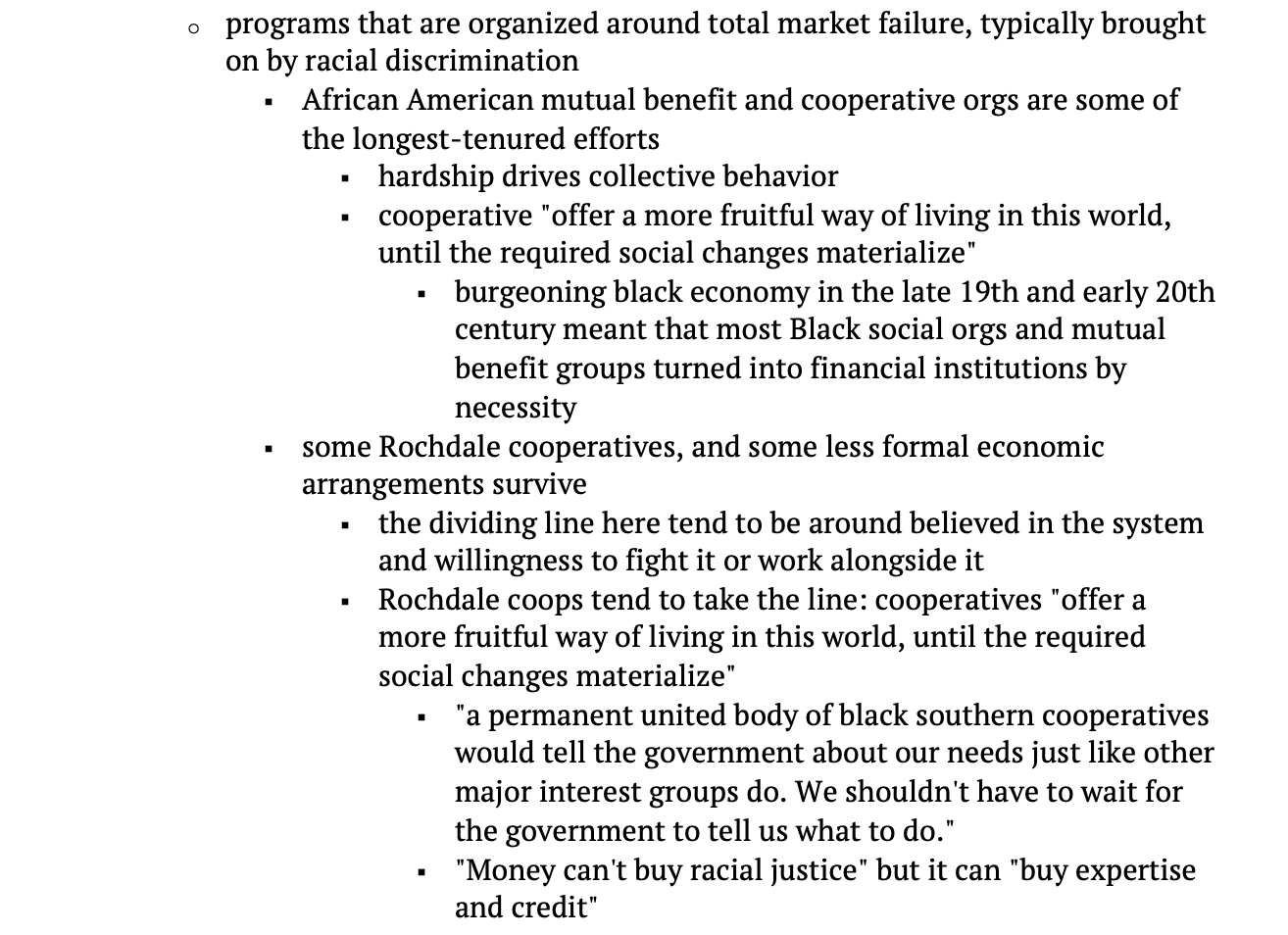
- Sometimes it appears as though there's a dearth of economic/cooperative activity because of the dangers of formal structures in these spaces. Particularly when cooperatives are seeking to transgress racially-motivated policy, they do not benefit from formal hierarchies or agreements which are vulnerable to direct attacks. While decentralization and informality have their costs, they seem to deliver significant benefit in these instances given the durability of these ecosystems. As Camille T. Dungy wrote, "Where there appears to be only dirt, there may be the root system of some kind of insistent thriving."
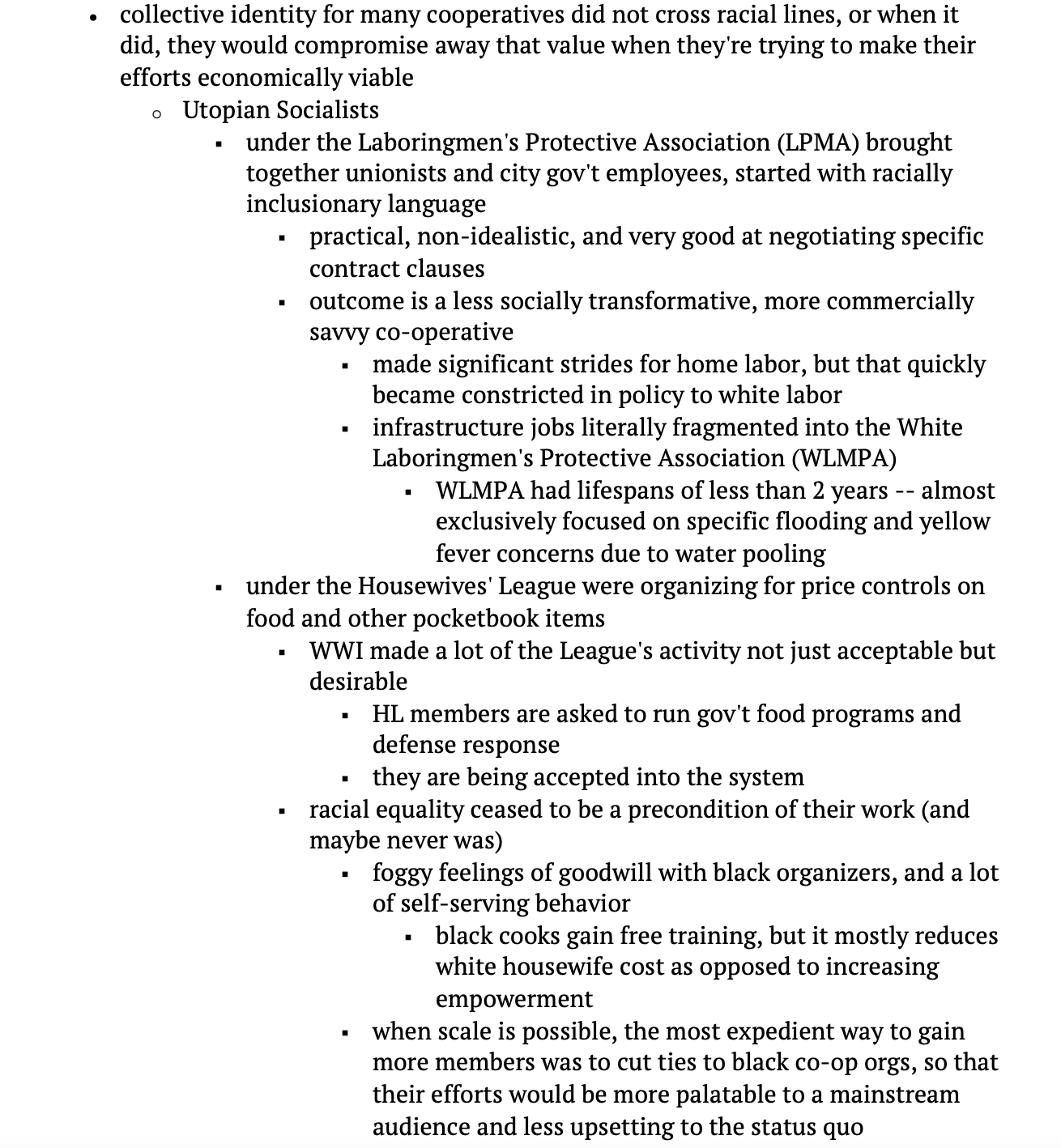
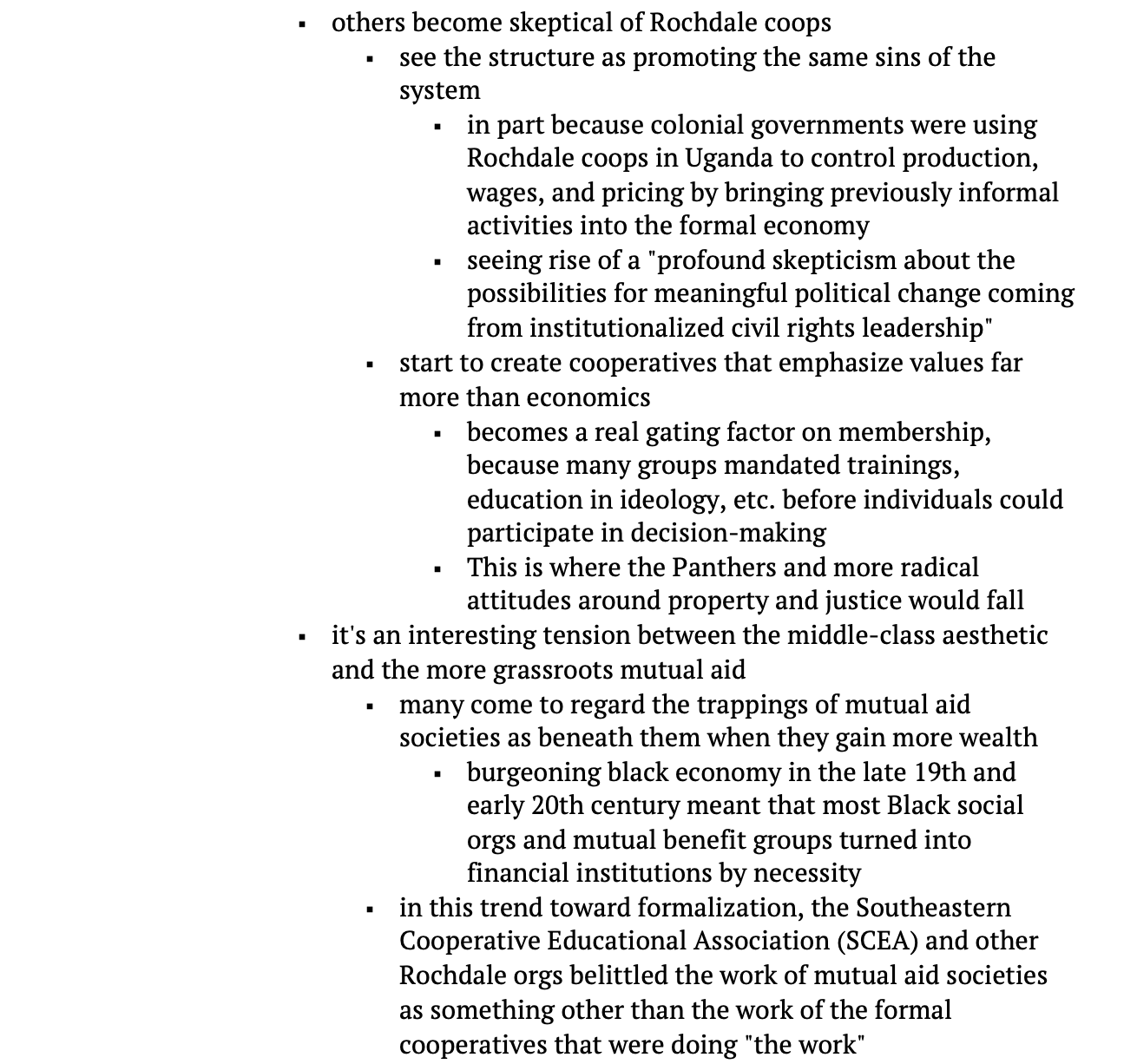
- Cooperative organizing is as much (if not more) social organizing as it is financial activity. A vast majority of the book is dedicated to the rhetoric of organizations and the factions that developed within cooperatives, as opposed to the merchant activity they undertook. While there are some adroit dissections of the financials of co-operative institutions, it's clear that those economics require collective identity, hence the initial focus. Many collectives fractured along line of race and trust in the system.
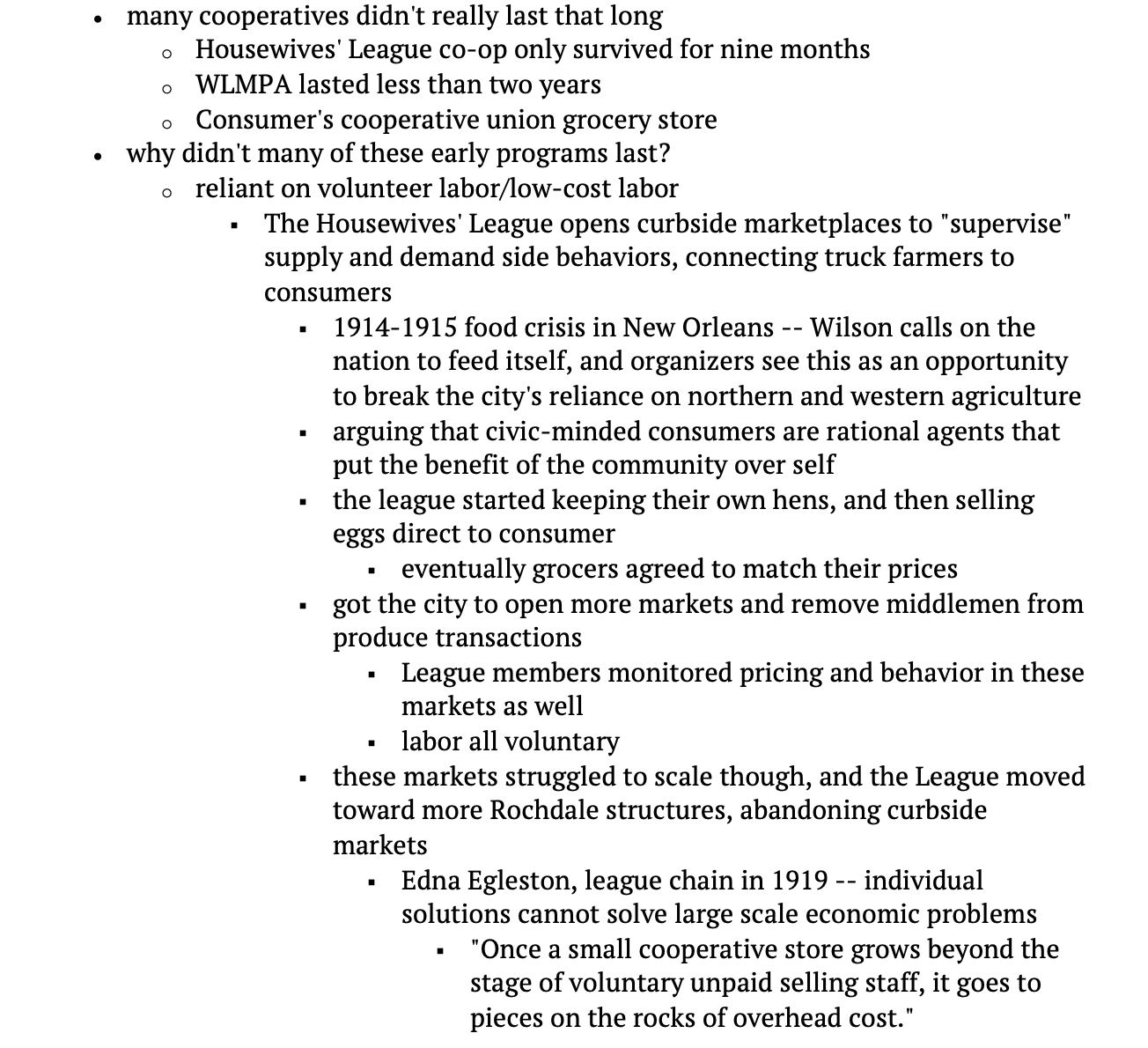
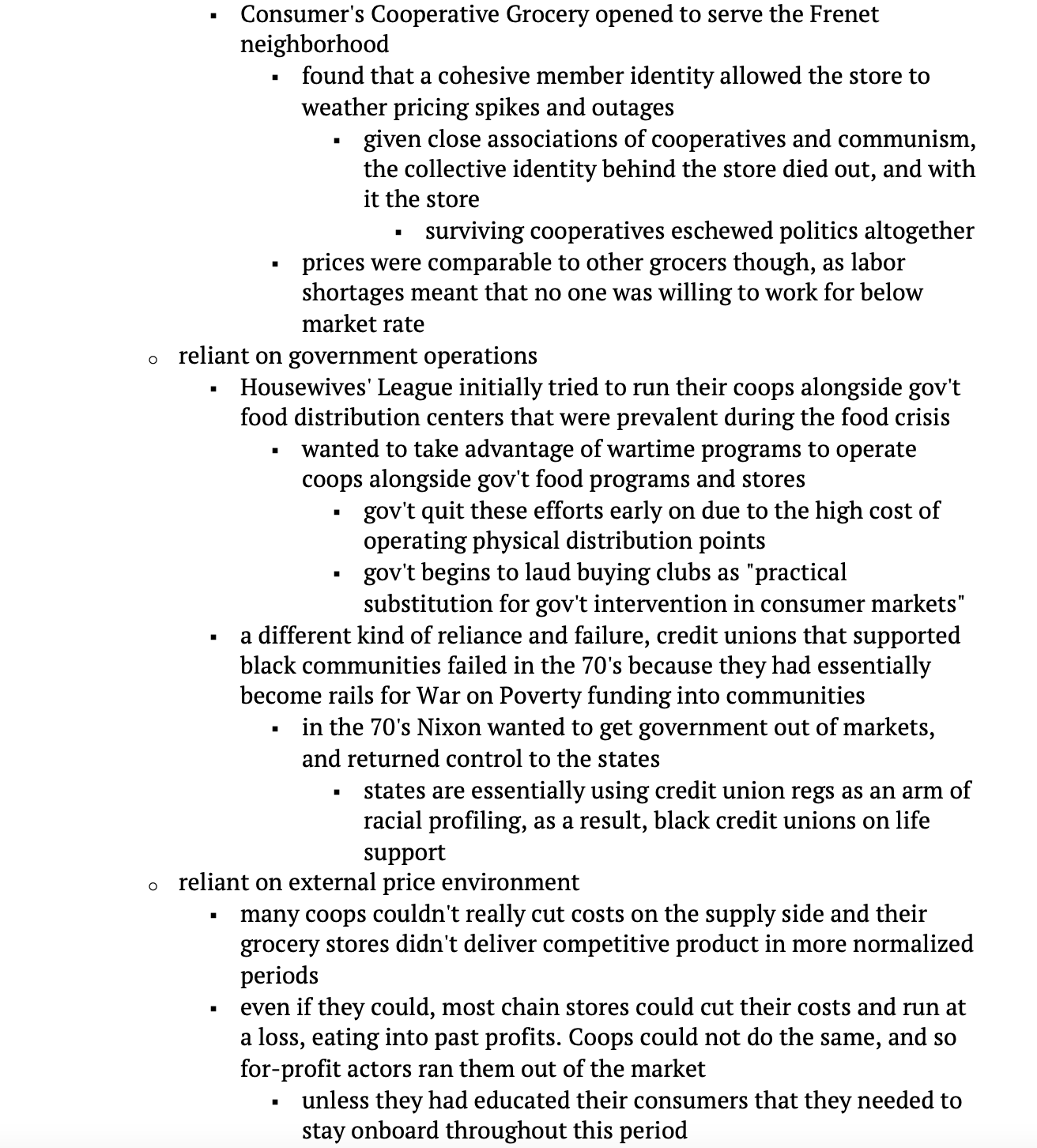
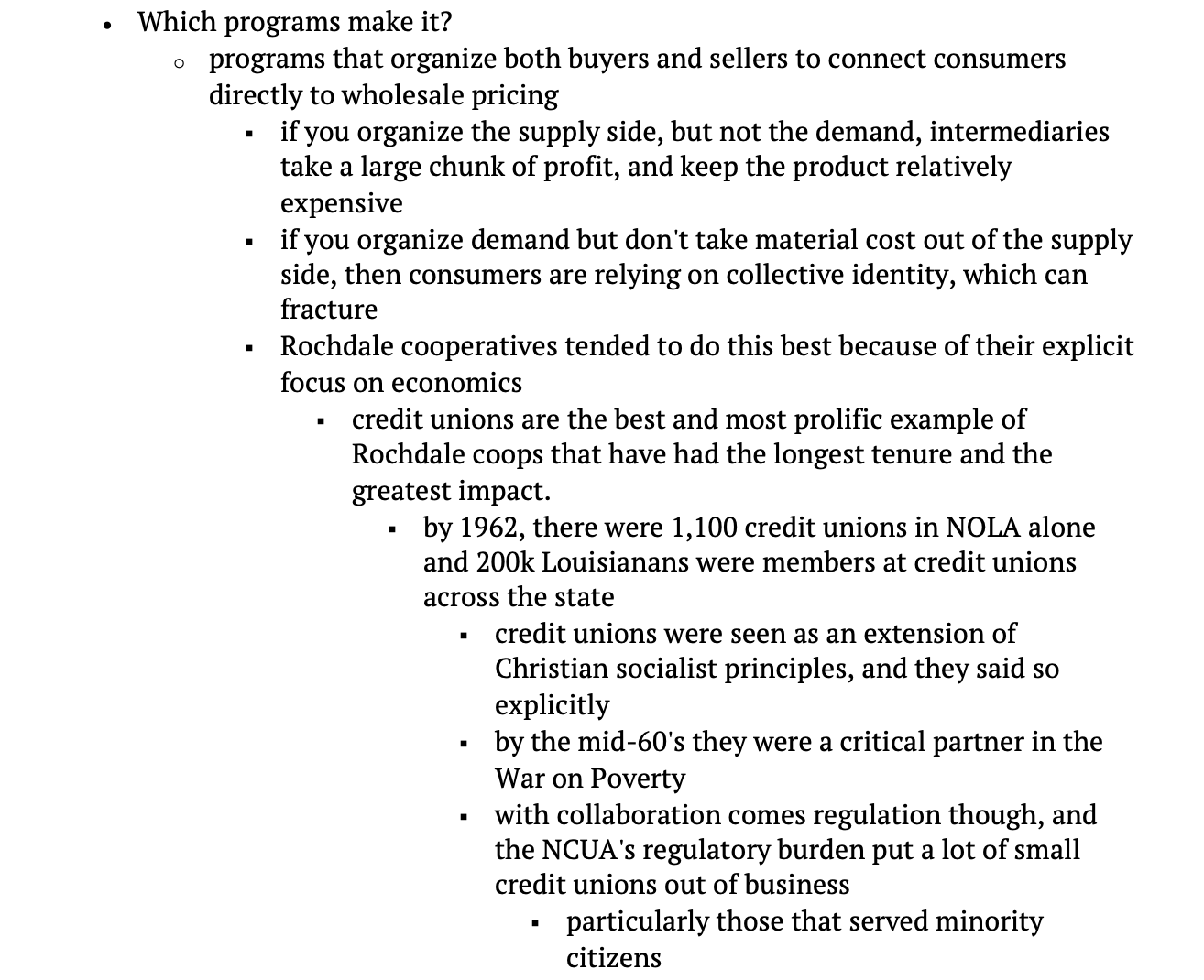
- Most cooperatives are ephemeral, lasting in response to a specific problem or a price imbalance. Cooperatives seem to last longest in two situations: when system oppression completely removes certain populations from market infrastructure and cops are the only way to access services. When a market is structurally broken, and cooperatives organize both the supply and the demand side of the market to allow consumers access to reasonable wholesale pricing.
Points I'm still exploring
- Many of these co-ops were tied up in social movements that made them politicly dangerous. The system defends itself violently. How will that manifest itself today were there to be a rise in cooperatives and politically dangerous ideologies?
- Many coops crashed on the rocks of overhead cost, a problem which technology is rapidly solving. It opens up the possibilities that many of these coop models might be a fit for various consumer needs or supply chain issues. Which cooperative economic models are best fit to which situations? I'm also wondering why I never really ran into cooperative economics in school, but I'm guessing that has to do with the point above.
- Many of these cooperatives come of age in inflationary periods driven by speculation or in the economic downturns that speculative mania. As a result, most of these cooperatives held anti-speculation as a core value. Where is the line between anti-speculation and anti-investment? Does the attitude against speculation eventually undercut the long-term future of the cooperative? How influential are dividends on the realized price to the consumer? Does that change as timelines expand?
Book Notes