02: Fear and freedom, or how communities cope with being left on their own
Summary
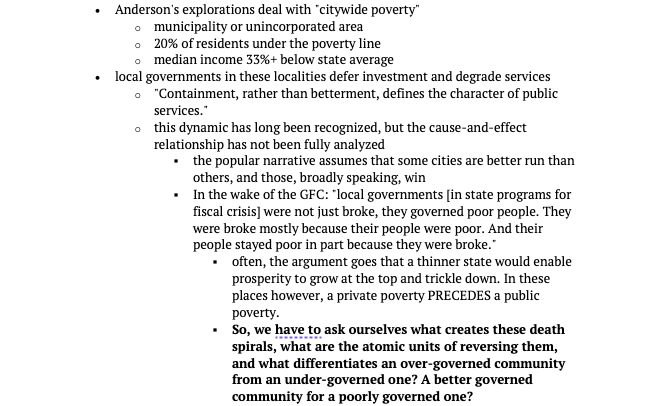
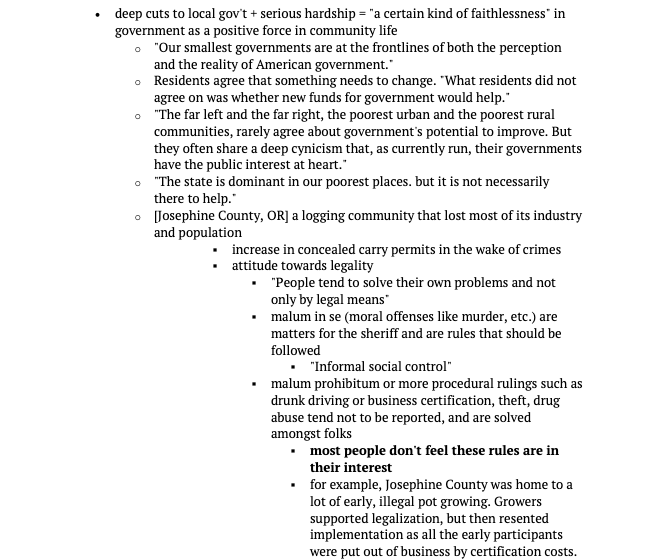
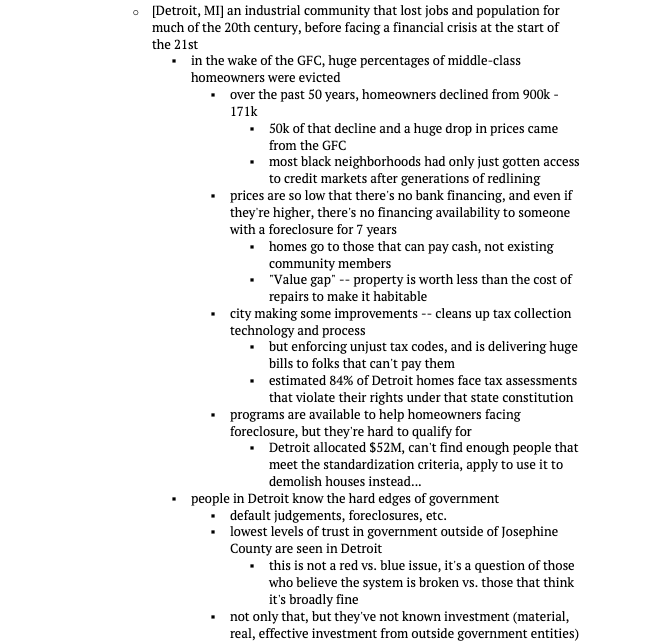
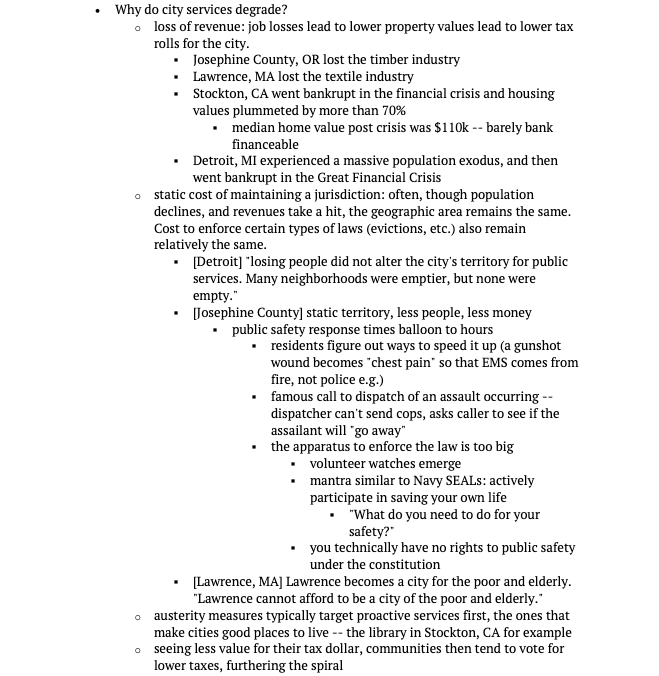
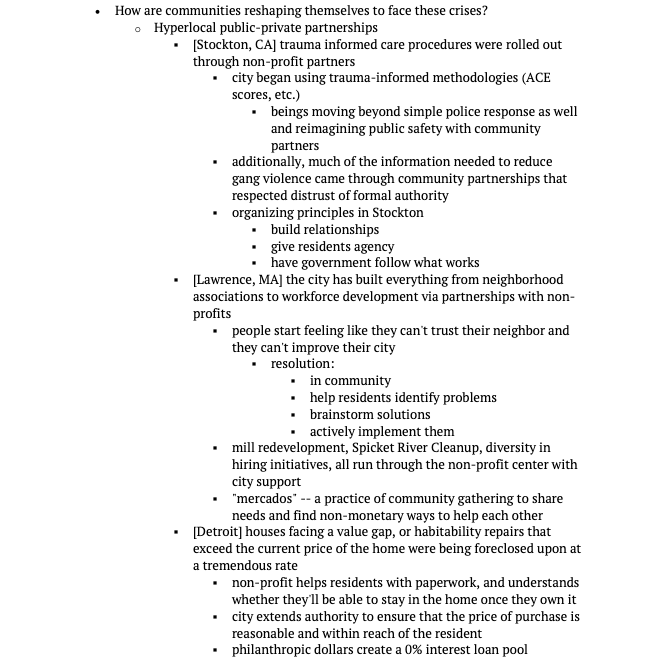
The Fight to Save the Town (Michelle Wilde Anderson) is an excellent exploration of the conditions that lead to government failure, and the societal efforts that can bring it back. Beyond the civic context, it's useful for anyone wondering why a centralized structure is failing in a particular market due to cost of access or diverse customer need, how they might arrest the decline or create new structures. The study explores Stockton, CA, Lawrence, MA, Detroit MI, and Josephine County, OR over the last several decades as they faced significant health, safety, and financial challenges.
Points that stuck with me
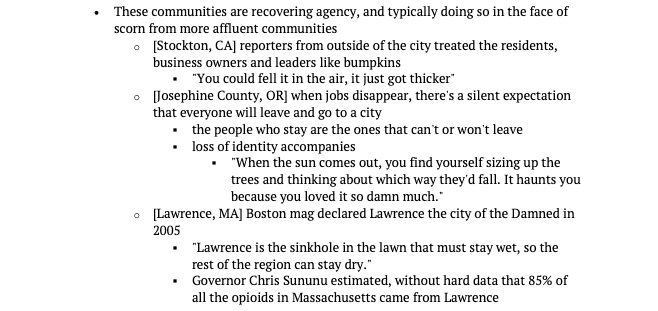
- Anderson addresses directly that many in these communities espouse libertarian values, regardless of historical party affiliations. The folks she describes don't believe that government contributes to their thriving, and in many cases, have seen government suppress it. They also tend to ascribe experiences with some government to qualities of all government, so ineffective local leadership affects their assessment of federal capabilities, and vice versa. This in some ways becomes a self-fulfilling prophecy, as low esteem for government lowers funds available to government. I have not seen a book address this reality so clearly since "Strangers in the Own Land".
- There is a recognition of the durability and the quality of the civic temper in these cities. Often they are looked down upon, but many of these communities have achieved a sort of solidarity that can only be dreamed of in more affluent communities.
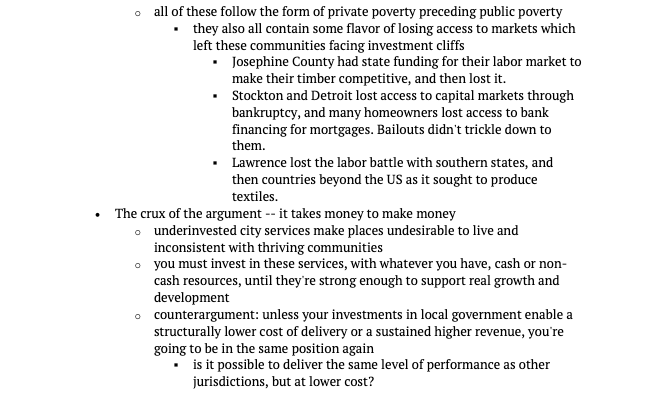
- Anderson also clarifies the types of programs that will move the needle in these communities. Often, it has less to do with investment in real estate and much more to do with fixing market failures, primarily those stemming from a lack of access to financial markets, job opportunities, and healthcare.
Points I'm still exploring
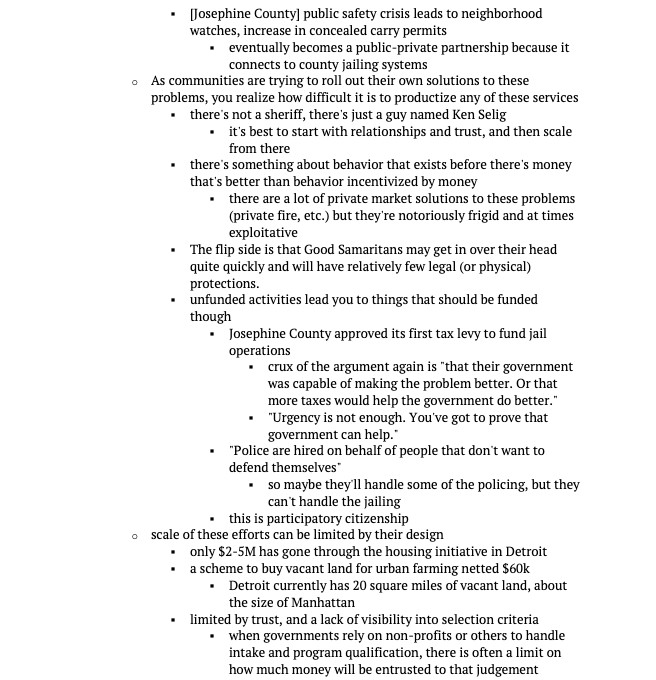
- This book has me wondering about the cost and structure of government. In some conversations, local government seems to be treated as a relatively a la carte commodity. There is a cost for a library, and public safety, etc. at least one that is run sustainably (without substantial volunteer requirements). I'm thinking a lot about the ways that high quality civic institutions could exist in a lower cost, sustainable structure. I'm also wondering about the minimum viable density required to support traditional US law jurisdiction.
- The delineation between a city service and a civic institution: many of the solutions in this book start out with people doing something for free that they want to exist in their cities – which of these things are ripe for long term citizen participation, and which should be more fully professionalized as city services, with the citizen occupying an end user role? This has important implications for structure and unit economics of these activities.
- The hierarchy of civic needs: Most of the needs that Anderson highlights – public safety, housing, mental health – require little to no hierarchy. There are a whole host of other things that occur inside of a city that might be more open to experimentation in form. Where is the line?
Book Notes