01: New Adventures in the Old World of NFTs
It is snowing slightly outside, the kind of flakes that require you to focus intently on a small pocket of air just to see them come down. They disappear otherwise, with each movement of your eyes. On the road below my window, cars zip past, oblivious to the conditions and my writing. They are moving and I am observing. I try to keep that in the front of my mind when dissecting the activity of others -- that I am turning my attention from my own motion to critique theirs. Two rules have emerged as a result: 1) assume good intent and 2) never oppose without proposing.
Until recently, I struggled to achieve that balance when considering a particularly explosive part of the Internet -- NFTs. Philosophically, good intent seemed easy enough to find; the ecosystem seeks to expand crypto adoption, increase artists' compensation, and concretize internet community. Yet I found myself uninspired, sometimes cynically so, by the kinds of community and use cases actually being created. More than that, I was unable to point to a project or a corner of my own mind that might hold a better alternative.
In the last several weeks, I have found communities in this corner of the world that are recovering imagination about structures of ownership, presence, and shared experience. I have some questions (scroll to the end) and some thoughts.
Questions You May Have
My Initial Hesitance Toward NFTs
I'll admit that my initial aversion to NFTs lasted several years and was characterized by a lack of deep interaction with the space. I saw Cryptokitties as a curiosity – a less than compelling game which happened to prove immensely useful by exposing necessary changes in Ethereum. Other games and art progressed in complexity, but I never found myself drawn to them in ways that would compel me to part with money in order to participate.
As profile picture (PFP) projects began to emerge – CryptoPunks and Bored Ape Yacht Club representing the most prominent – my ambivalence came to resemble outright frustration. In the interest of honesty, I felt no affinity toward the generative art produced, so I was ready to be biased against whatever I might have found.
On a more substantive basis, I was disappointed by what became of a somewhat-blank canvas for internet community. In important ways, the forms mirrored the physical world’s most pervasively exclusive – the yacht club or the country club. In particular, two axes of exclusivity emerge: presence and ownership. What follows is an exploration of a Reggie James framework that I’ve shamelessly stolen and probably misinterpreted.
I think the term "metaverse" is the spiritual realization that we want two primary models for the new social internet
— 🌀 (@HipCityReg) January 2, 2022
PRESENCE X OWNERSHIP
not going to have comments on this thread because... I'm not in the mood to respond on a sunday
Consider the traditional country club. It’s intention is to provide a high-quality leisure experience to a regular group of participants. There are pretty natural limits on certain aspects of presence there. If you aspire to a quality golf course, you’re going to limit the number of rounds played based on growing days, inches of rain, drainage, etc. If you’d like each member of the community to play the course a certain number of times in a year, you’ve arrived at a natural limit on “presence” at the club. We might argue against the goals of that community — “no one needs a golf course that nice”, etc. — but absent that type of value judgment, some limit on membership makes sense.
Country clubs have rightly earned a more pernicious reputation for the unnatural limitations they impose on ownership. If you live within driving distance of a country club, and have the funds to meet their financial requirements, but happen to fit one of many marginalized identities, you still wouldn’t be able to join the club. Shadow markets in social capital, and in this case, an unwillingness to recognize certain group’s social capital as valid, gave these clubs the reputations that they’ve earned today.
The good news in NFTland is that if you wish to join a club, congratulations! Social capital now has an executable price. An excessively high price – Bored Apes typically transact anywhere from the low 6 figures to the mid-single digit millions. But it doesn’t matter who you are – you can buy in. If you don’t have that kind of capital, you could have spent your time scouring the Internet for NFT projects, and participated in the minting process, bringing the barrier to access into the hundreds of dollars. Ownership doesn’t get much more accessible than that.
While these communities have removed some of the arbitrary or prejudicial restrictions on ownership, they seem to have maintained or created other limitations on community that seem unnatural in digital space. The generative nature of the art is a literal digital abundance; there are significantly more permutations of PFPs than the 10,000 that are typically are minted. Communities may always need to have bounds of membership and presence but given the relative scalability of digital space and assets, we could be more thoughtful about those bounds.
It might be that my frustration is arising from a misidentification of the actual intentions and goals of NFT communities. They could be exclusionary for the sake of it, they could be ponzi schemes. They could even be digitally priced tickets for physical world experiences, as some groups have used NFTs to date. If, however, we mark them as an attempt to create digitally-native communities of deep trust, shared resources, intention, and meaning, the frustrations remain. We’re not experimenting much with communal membership and in many ways, we’re taking the richest parts of those experiences offline.
It’s not an indictment of those communities, it’s just my midwit rationalization for not owning any of them.

Interesting experiments in presence and ownership
There should be an artful interlude here – something long enough for you to ignore a drastic change in tone when I begin pumping my own bag, but the reality is that my opinions changed about as quickly as the tone will in this essay.
In the last month I have been on something of a sabbatical, dabbling in new projects, spending more time with friends, and playing on the internet. (A story for another day is the fact that I didn’t find these communities compelling until I shifted my Internet activity from “mostly work” to “mostly play”.) I was not searching for the most egalitarian internet community, or the most experimental. I was merely wandering and reading and scrolling Instagram et voilà.
I must admit that my feelings for Creature World – my first foray into the world of PFP art — represented an inversion of my apathy for others. I liked the images; they were strange and compelling and cool. The project might have been situated amongst a more compelling lore than other projects – artist Danny Cole has been exploring the aesthetics and emotions of Creature World through more traditional media for some time now – but fundamentally, it’s generative art: pieces mixed and matched within defined parameters.
Creature World has held in-person events limited to NFT holders. The community recently dropped a clothing line on January 6th (I copped two pieces, be on the lookout South Bend.) All that is to say, in some ways, this project is the same as many other NFT experiments. I appreciate its share of those aspects in a way that I do not appreciate (or forgive) the same in other projects.
Despite its obvious similarities, I found in Creature World some material evolutions in the PFP form as well. I bought my first Creature in the days leading up to Journey 2: THE CREATURE FINDS ITS VOICE. Collective journeys have marked the maturation of the Creature World community. The first, Creature Playground, gifted token holders (and only token holders) 1 of 7 puzzle pieces. If they managed to find 6 other holders with the remaining puzzle pieces, they received unique art.
I assumed then that this journey might be similar, encouraging Creature World holders to interact with each other more deeply and directly, while encountering some of the limits of presence discussed above. I imagined an experience involving some proximity-based audio and a visual representation of the images tied to their NFTs. This would have been an interesting (and from a technical perspective prohibitively ambitious), though less transformative exploration of community in digital space.
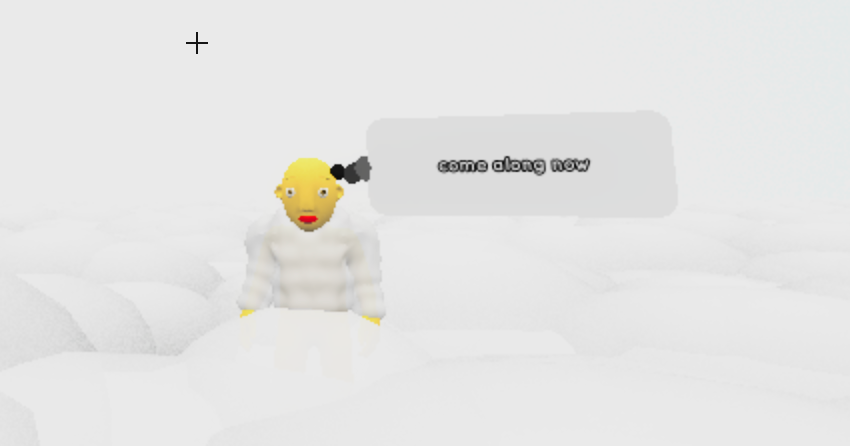
Literally none of those things happened. At 7 pm Eastern on December 19th, I visited creature.world and found myself alone in clouds, roughly hewn from digital space. Presently, a creature figure approached and initiated text-based dialog. There were no clickable response options. Due to assumptions based on the name of the event and my aforementioned expectations, it came to pass that at 7:01, in my basement, I was shouting “Hello” at a creature on my screen. The creature did not respond. The other humans in my house, did. More on that later.
Eventually, I found I could not interact with the dialog because I had not yet “found my voice”. An invitation to further exploration brought me to a five-way intersection. Without much intention, I walked toward a beige/olive creature and followed them down their path. I emerged into a clearing of trees and a semi-circle of creatures that looked just like the one I had followed. As I completed their circle, eerie sound began, and the creatures raised their arms in sync. Their voices rose, and you could see a multicolor stream of light issuing from their mouths alongside their song. These lights combined to form a pulsating sonic boom that covered the sky in psychedelia.
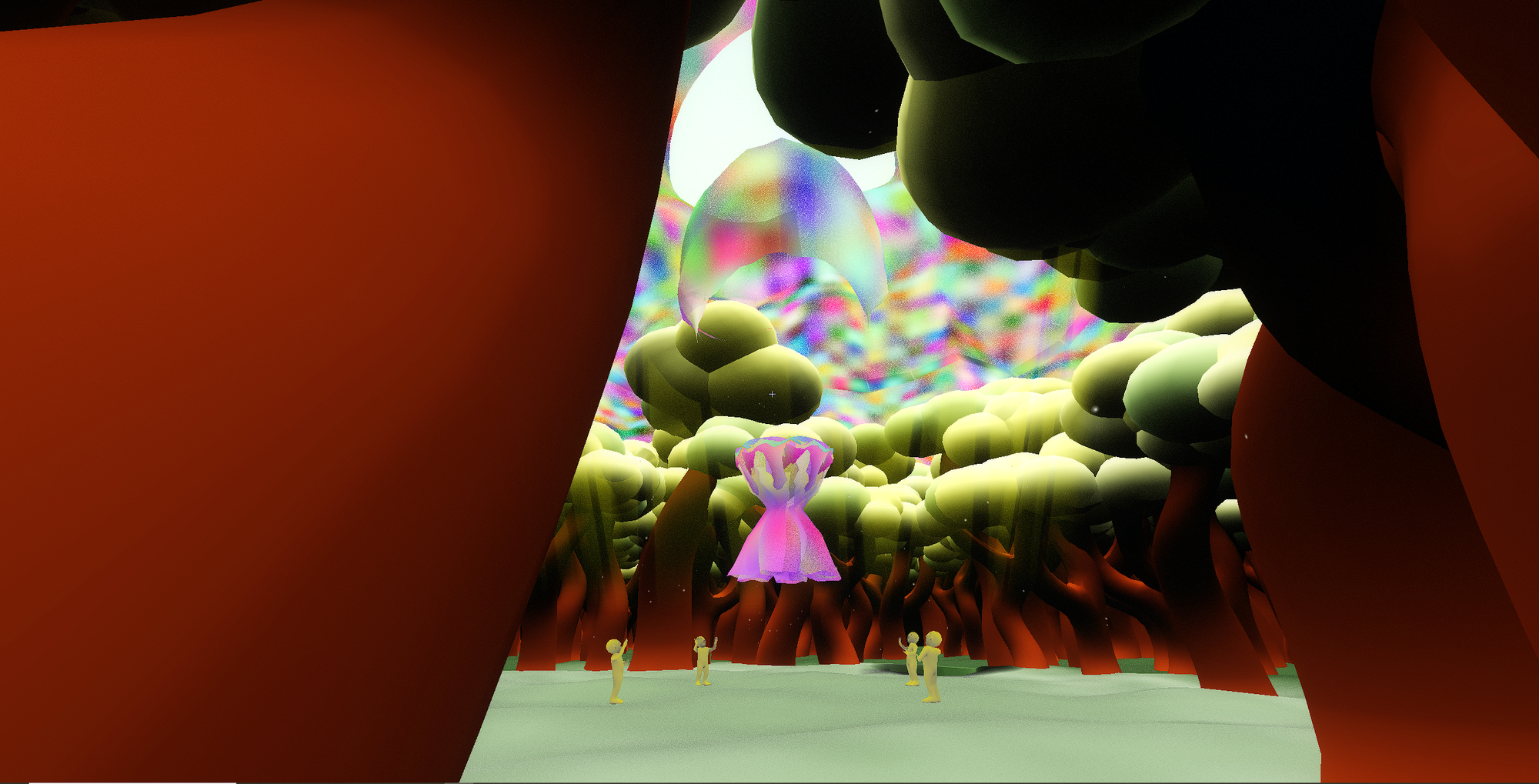
I found myself deeply immersed in the moment, temporarily breathless, and completely disabused of my expectations for the journey. I had stepped into a digital art installation, and performance art at that. As I looked away from the sky, I found my Creature guide next to me, asking if this was how I wanted to use my voice. If so, the mouth on my Creature avatar would change to reflect an experience of meaning. This marking was seen by some in the community as maiming, but more on that later.
I opted to keep exploring, and walked through each of the five paths. At each turn, I kept expecting to see other users walking around, but met only code. This was a great gift for presence as the experience was not materially degraded if more people experienced it rather than less. This resembles a single player game, I recognize, but unlike any game that I have played. It is also unlike some of the more socially-driven games such as races that eventually butt up on natural limitations of scale.
Reflecting that reality, the journey all but completely divorced the right of presence from the right of ownership. A wallet containing a Creature was not necessary to explore creature.world. Anyone could click on the URL and walk through the installations. Proof of NFT ownership became necessary at the end of the experience, to commemorate the “use of voice” that most resonated with the user. Digital presence as a right was almost unlimited.
Interestingly, physical presence was actually something of an inhibitor to the experience. I invited some friends over to watch the journey and my partner was there as well, and somehow I felt more drawn to the screen than to the humans around me. If some definitions of the metaverse imply a movement of the most valuable parts of our identity online, this was the first time I felt competing immediacy in the digital and physical worlds, and chose the former.
As you can see, this is not an argument that limits on presence and ownership should be abolished, rather that they should be more considered and organically imposed. It is an encouragement toward more experimentation, and as Alain de Botton writes “a greater subtlety rather than a nervous silence”.
As with most experiments, this divorce of ownership and presence as rights was less an exploration of something new and more a rediscovery of something very old under new conditions. I’m in the middle of reading “The Dawn of Everything” and one passage struck me as particularly relevant:
For most Native American societies [possessive individualism] was profoundly alien. If it applied anywhere at all, then it was only with regard to sacred objects, or what the anthropologist Robert Lowie termed ‘sacra’ when he pointed out long ago that many of the most important forms of indigenous property were immaterial or incorporeal; magic formulae, stories, medical knowledge, the right to perform a certain dance, or stitch a certain pattern on one’s mantle. It was often the case that weapons tool and even territories used to hunt game were freely shared — but the esoteric powers to safeguard the reproduction of game from one season to the next or ensure luck in the chase were individually owned and jealously guarded.
If everyone has the right to be present for these ceremonies, perhaps only the owners have the right to commemorate. We should note that in the above context, ownership had different meaning as well — many societies had classes of wealth that would be used only for the purchase of sacred artifacts (or moral debts), and would rotate ownership through sales which did not affect subsistence. The rights of ownership might expand beyond our preconceived limits as well, through an impermanence that would call us toward ever-widening communities of shared belonging.
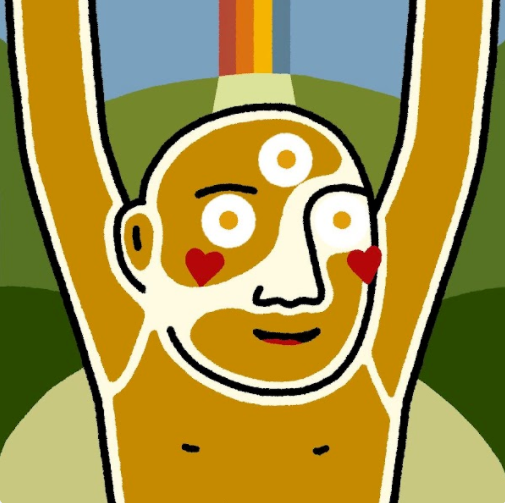
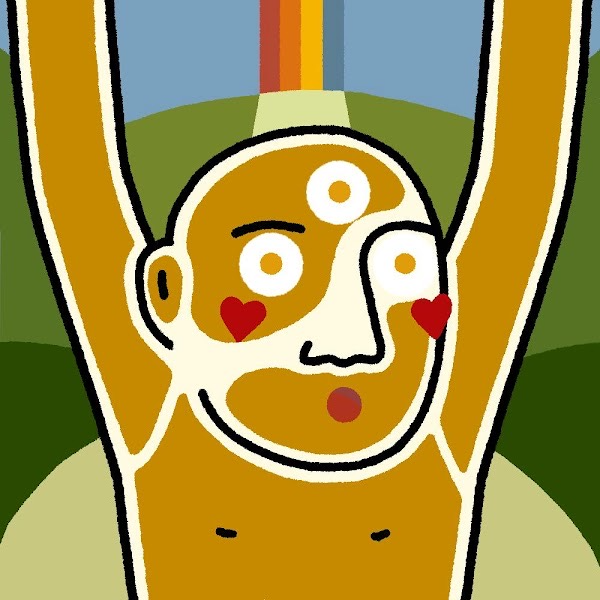
If that sounds somewhat spiritual, it’s because this was something of a spiritual experience for me. Real community always has been. Creature World, in an almost inverse skeuomorphism, presented digital forms I had never seen to call out emotions reminiscent of my best physical world experiences — church with friends, backyard parties with neighbors, citywide celebrations. Maybe it’s a reflection on my journey of deconstruction and rebuilding that the simple theology of Creature World so resonated, but it did and I am glad.
All this (and if you’re still with me, thanks) is to say that there are communities out in this world that are recovering imagination about forms of ownership, presence, and experience that are worth paying attention to. We should not stamp out these experiments or dismiss them in the name of profit. Our lives would be all the more impoverished for it.
Questions I Still Have
- What are the best resources to better understand the natural limits on presence in digital space – particularly across modes of game/experience?
- How could we facilitate an economy of rotational or ephemeral possession in NFTs while protecting the stewardship/individualization that comes with ownership?
- Am I missing the point on what PFP communities are actually trying to build?